
Why Collectors Still Sort Through 1984 Pennies
Interest in the 1984 penny value is driven by the presence of rare production defects and the specifics of the transition to new planchet materials.
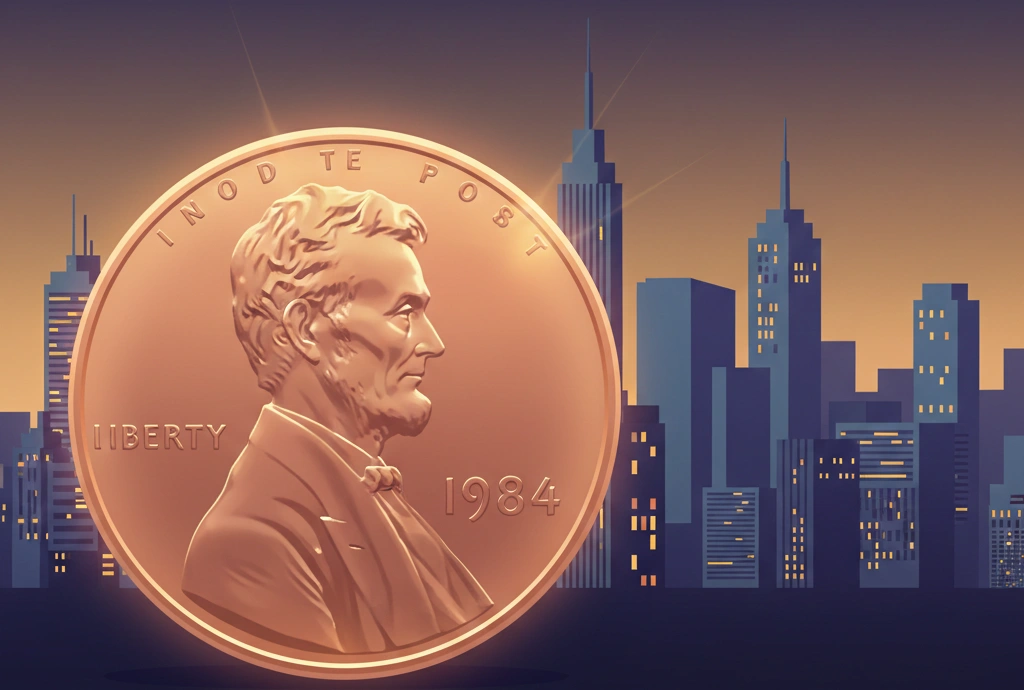
This issue represents one of the most massive mintages in the history of the U.S. Mint, making the search for valuable specimens accessible to a wide range of researchers.
In 1984, coins were struck according to the standard adopted in mid-1982, involving the replacement of copper alloy with a zinc core.
The pure copper plating accounts for only 2.5% of the total coin weight, providing the necessary appearance while reducing production costs.
Parameter | Value |
Coin Weight | 2.5 grams |
Core Composition | Zinc (99.2%) |
Plating | Copper (0.8%) |
Diameter | 19.05 mm |
Mintage (Philadelphia) | 8,151,079,000 |
Mintage (Denver) | 5,569,238,906 |
Doubled Die Obverse (DDO) Variety
The primary object of search in 1984 is a coin featuring distinct doubling of the image on the obverse, localized in the area of Abraham Lincoln's earlobe.
This defect arose from an error during the manufacturing of a working die, having transferred a double contour to thousands of planchets before the discovery of the flaw.
The doubling is clearly visible without the use of magnifying devices, appearing as a second earlobe located below the main one.
Unlike many other types of DDO, the 1984 variety does not affect the date or inscriptions, being limited to the anatomical details of the portrait.
Market Value of the 1984 DDO Variety
The price of a specimen with a doubled ear depends directly on the degree of preservation and the absence of zinc core corrosion.
Grade (Condition) | Average Price (USD) | Auction Record (USD) |
EF 40 (Circulated) | $30 – $50 | — |
MS 63 (Uncirculated) | $150 – $220 | — |
MS 65 (Gem RD) | $350 – $500 | $850 |
MS 67 (Superb Gem) | $1,500 – $2,500 | $3,910 |
The record price of 3,910 US dollars was recorded in 2019 at a Heritage Auctions event for a specimen in MS 67 Red condition.
Price Changes for Rare 1984 Varieties
Analysis of trading platforms over the last 12 years shows steady interest in certified 1984 DDO coins.
The average annual value growth for coins in MS 65 condition is approximately 3.2%, outperforming inflation rates in the long term.
For specimens in low condition (below MS 60), the price remains stable in the range of 20–40 dollars, showing no significant fluctuations.
A price drop of 8% in the MS 66 segment was observed in 2021, being linked to the market release of several new batches of certified coins from old hoards.
Preservation Issues for 1984 Zinc Coins
Zinc is a chemically active metal, prone to rapid degradation upon damage to the copper plating.
1984 coins often suffer from "zinc bubbles" — swellings under the copper layer arising during the galvanization process.
The presence of such bubbles on the portrait or important image details reduces the numismatic grade and the final value of the coin.
Dealers reject specimens with signs of black or white corrosion, as the destruction of the core is an irreversible process.
Minting Errors Not Related to the Die
Besides the DDO, researchers search for technological errors occurring directly during the strike of the press.
Off-Center Strikes: Coins struck with a displacement of more than 15% are valued at 20–50 dollars when retaining the date.
Broadstrikes: Specimens struck without a collar ring have an increased diameter, being valued at 5–15 dollars.
Die Clashes: Impressions of reverse details on the obverse occur rarely, adding 10–25 dollars to the value.
Analysis of Regular 1984 Coins in High Grades
Even without errors, regular 1984 pennies without a mint mark can be expensive upon reaching an MS 68 grade.
Due to the enormous mintage, finding a coin without microscopic scratches in bank rolls is extremely difficult.
Mint Facility | Grade | Price (USD) | Population (PCGS) |
Philadelphia | MS 68 RD | $350 – $500 | < 150 pcs. |
Denver | MS 68 RD | $200 – $350 | ~ 300 pcs. |
The value of coins in MS 69 grade remains theoretical, as almost no confirmed specimens of such quality exist currently.
Searching and Sorting
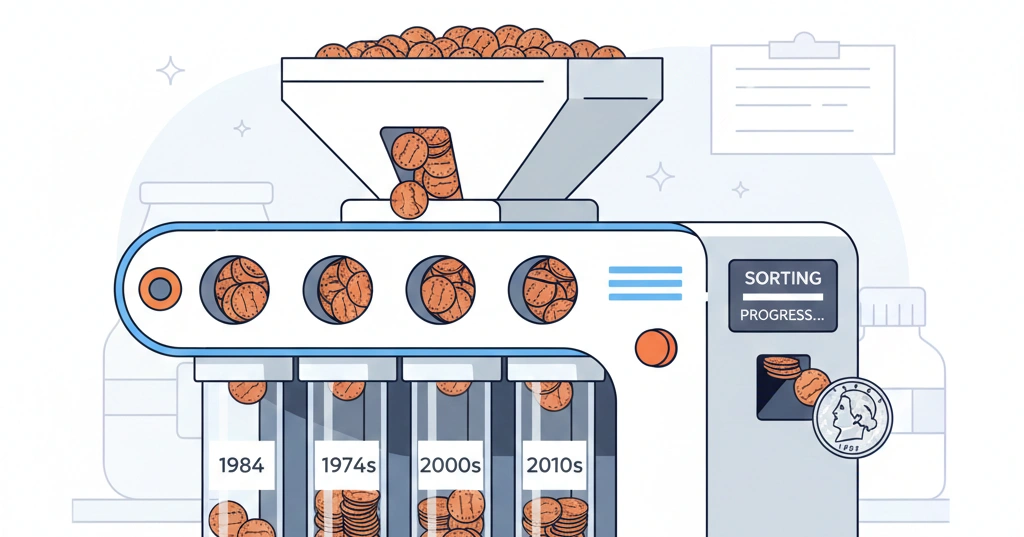
Professional searching includes the use of a coin value app and electronic scales for filtering out coins with altered compositions.
Sorting through bank bags remains an effective method due to the fact that the doubled ear variety was not widely known to the public for a long time.
The investment attractiveness of 1984 lies in the possibility of discovering a rare die defect among a multi-million mintage of regular coins.
Verification and Grading
Confirming the authenticity of the 1984 DDO variety requires certification by PCGS, NGC, or a free coin identifier app.
The presence of a slab protects the coin from zinc oxidation and confirms the grade, excluding disputes over subjective surface condition.
The percentage of coins returned from grading with a "Genuine/Details" label (due to cleaning or corrosion) reaches 40% for finds from circulation.
Conclusion
Interest in the 1984 penny persists thanks to the unique "doubled ear" defect, possessing high market liquidity.
Sales statistics confirm the value of certified specimens, their price exceeding the face value tens of thousands of times.
A thorough inspection of the 1984 mintage allows for identifying rare varieties representing significant interest for the numismatic market.